Bia Truck Racing / Mobile Game / Growth Product Management
Heavy trucks.
Real racing feel.
Made for mobile.
I created and led Bia Truck Racing, an original truck-racing game that combines believable vehicle physics with accessible arcade handling, competitive progression, driver personalities, and a mobile-first experience.
From competitive research and UX architecture to game economy, testing, and launch planning, I defined the product direction and coordinated a team of three developers.
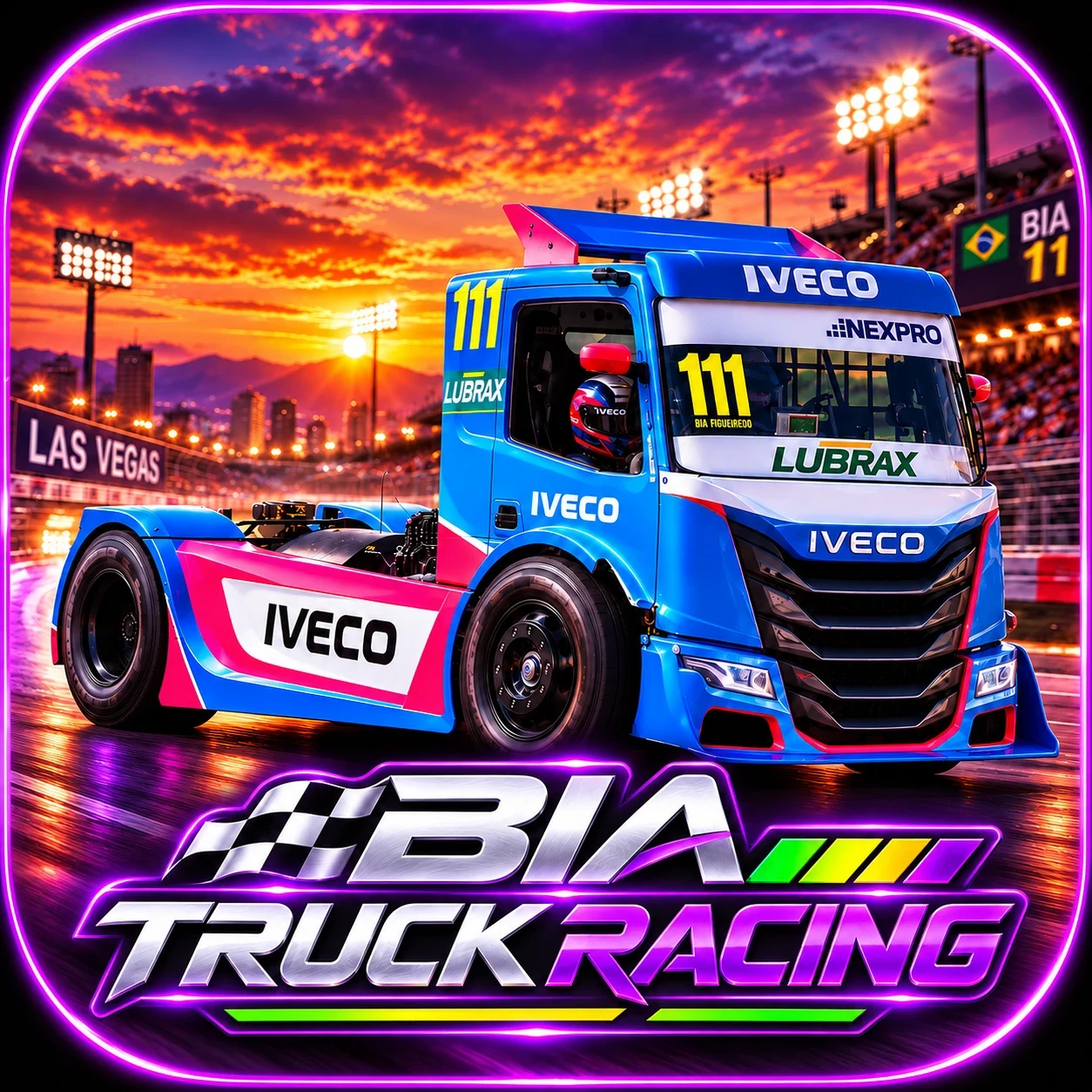
Creator-provided Bia Truck Racing artwork
Arcade-racing positioning and player progression
Navigation, controls, feedback, and onboarding
Activation, rewards, economy, and return loops
Prioritization and coordination of three developers
01.The Challenge
The challenge: make a heavy truck feel fast, believable, and fun.
A racing truck is large and heavy, but a mobile game must remain responsive and satisfying. I wanted to combine the character of real truck racing with an accessible experience for younger players, enthusiasts, and fans of Bia Figueiredo.
Product opportunity
Authenticity without simulator-level friction.
The experience had to balance realistic vehicle weight, braking, steering, speed, and cornering against short race sessions, touchscreen controls, and a progression system that starts with a basic truck.
Bia's role as a driver and in-game coach adds a human identity to the experience, while rivals and competitions give the journey purpose.
Product research
Understand player behavior, then design an original experience.
Studied racing-game pacing, session length, responsiveness, and how players learn controls.
Examined how career goals, rewards, vehicle upgrades, and escalating challenges support continued play.
Compared control layouts, on-screen feedback, readability, and fast decision-making on small screens.
Evaluated how earned rewards, currencies, optional purchases, and long-term goals can work together.
Competitive research informed product principles. Bia Truck Racing's gameplay systems, progression, character experience, and visual direction were designed for this original project.
Give new players an approachable first race, then create longer-term motivation through driver growth, truck upgrades, championships, rewards, and competition.
02.The Solution
I built the race, garage, and career flow.
I connected truck racing with customization and championship progression. The public preview shows Interlagos, Marina Bay, the garage, race items, and boost.
Official game trailer
Video from the game website. Press play to watch.
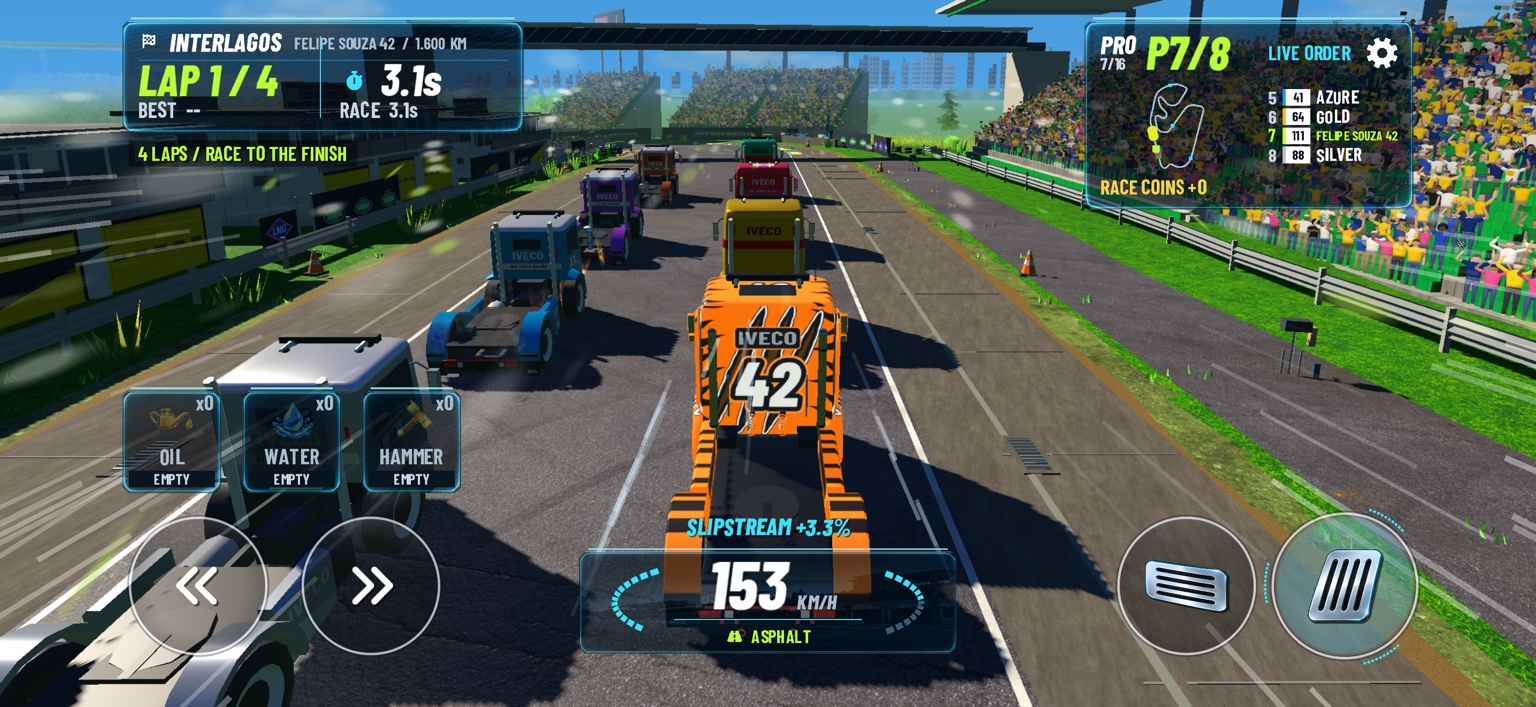
Interlagos: race start
Open screenshot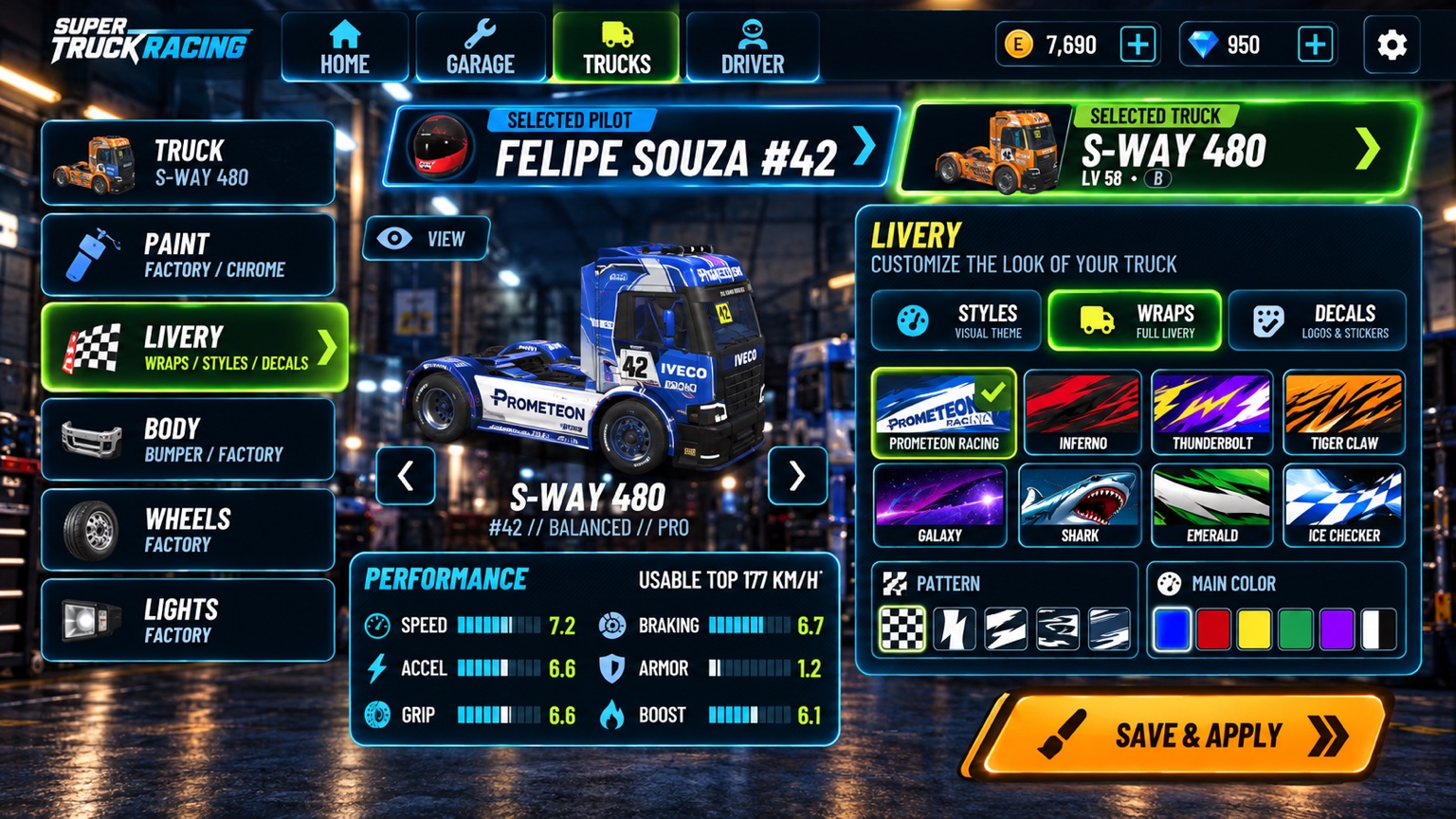
Garage and customization
Open screenshot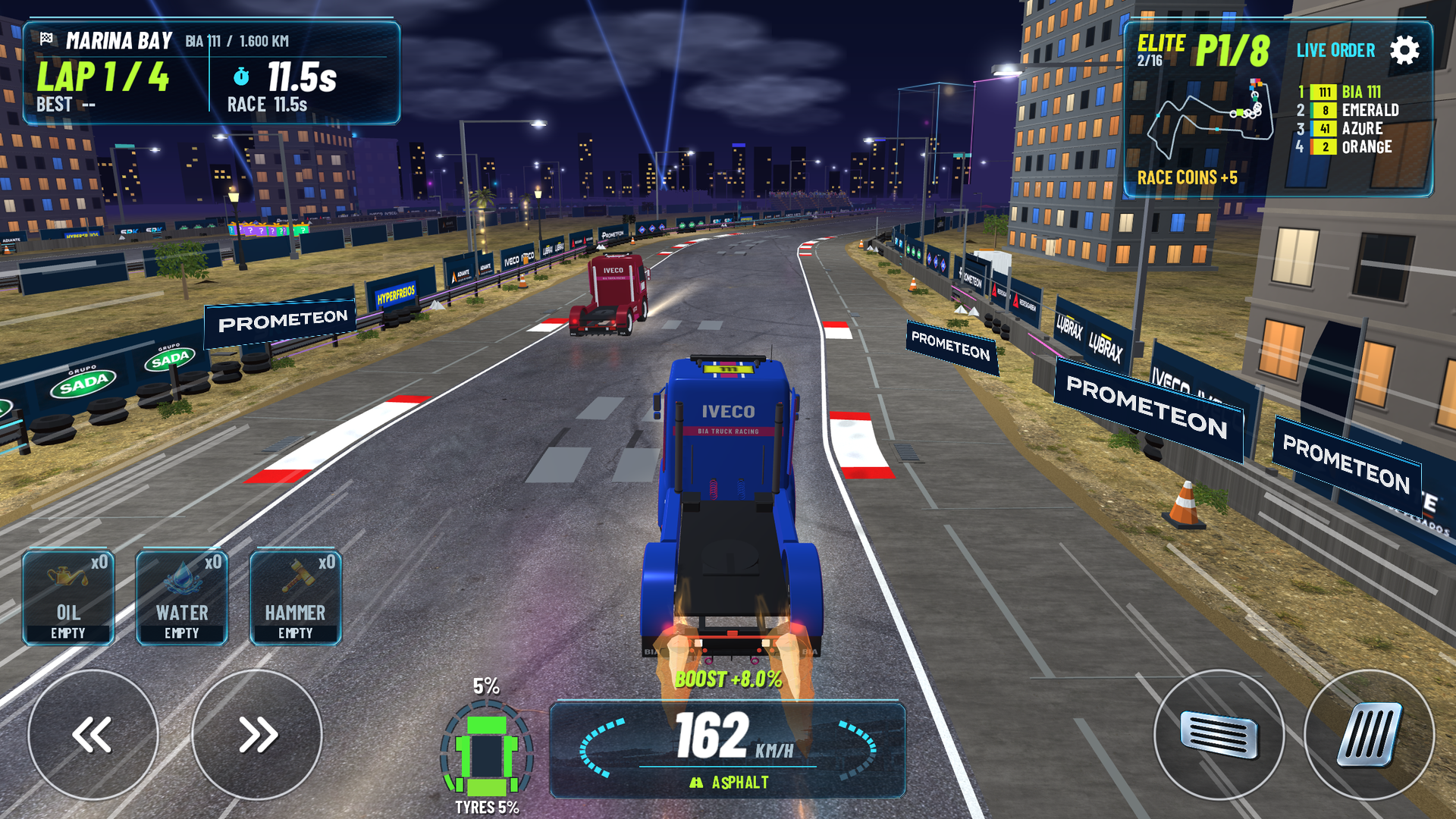
Marina Bay: night racing
Open screenshot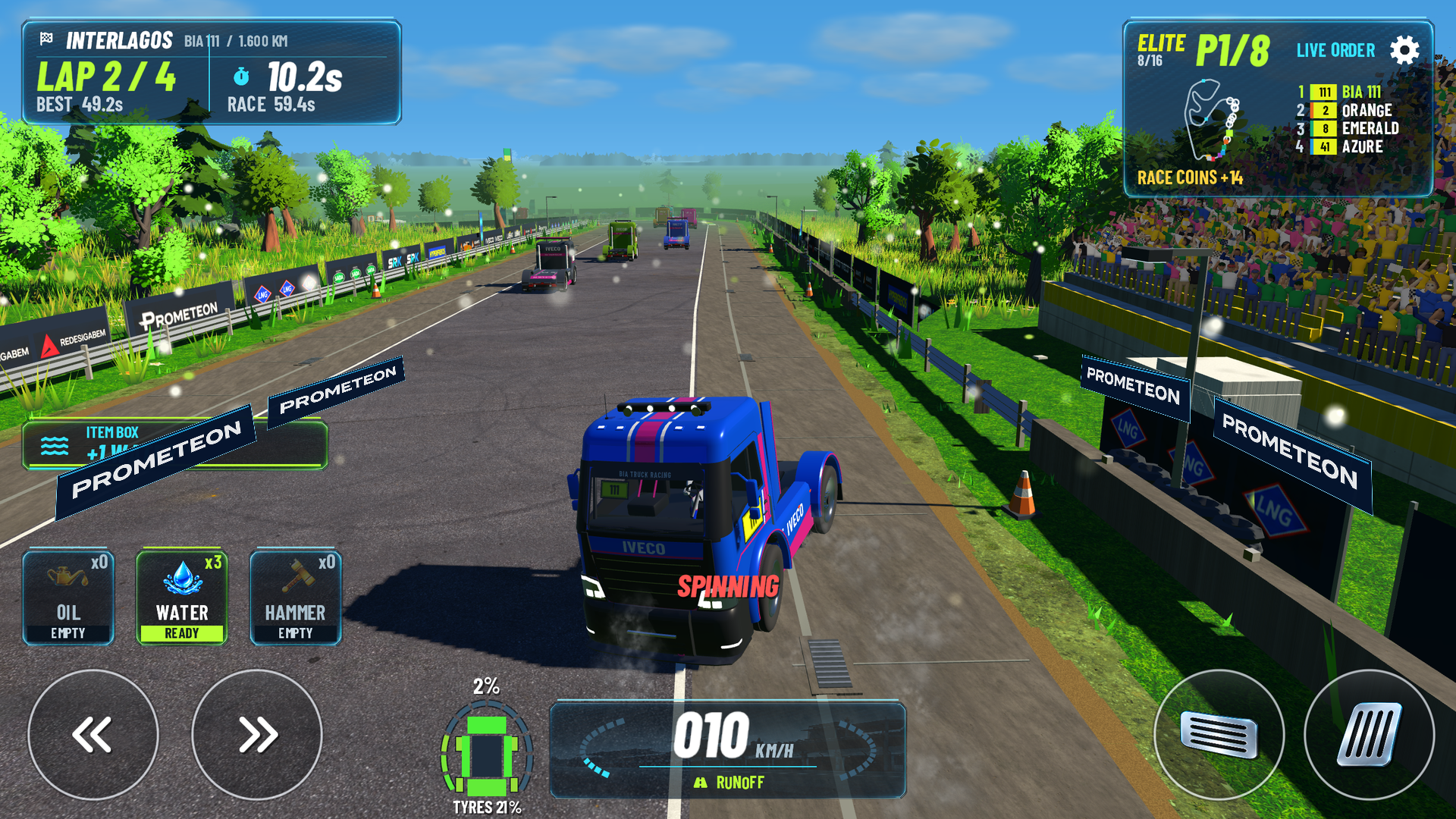
The 111 on track
Open screenshot01. Start a career
I introduce the championship and the next race.
02. Learn by racing
I use Bia's coaching to introduce the controls and driving.
03. Earn progression
I connect race results to coins, stars, points, and experience.
04. Develop the truck
I bring upgrades, paint, and decals into the garage.
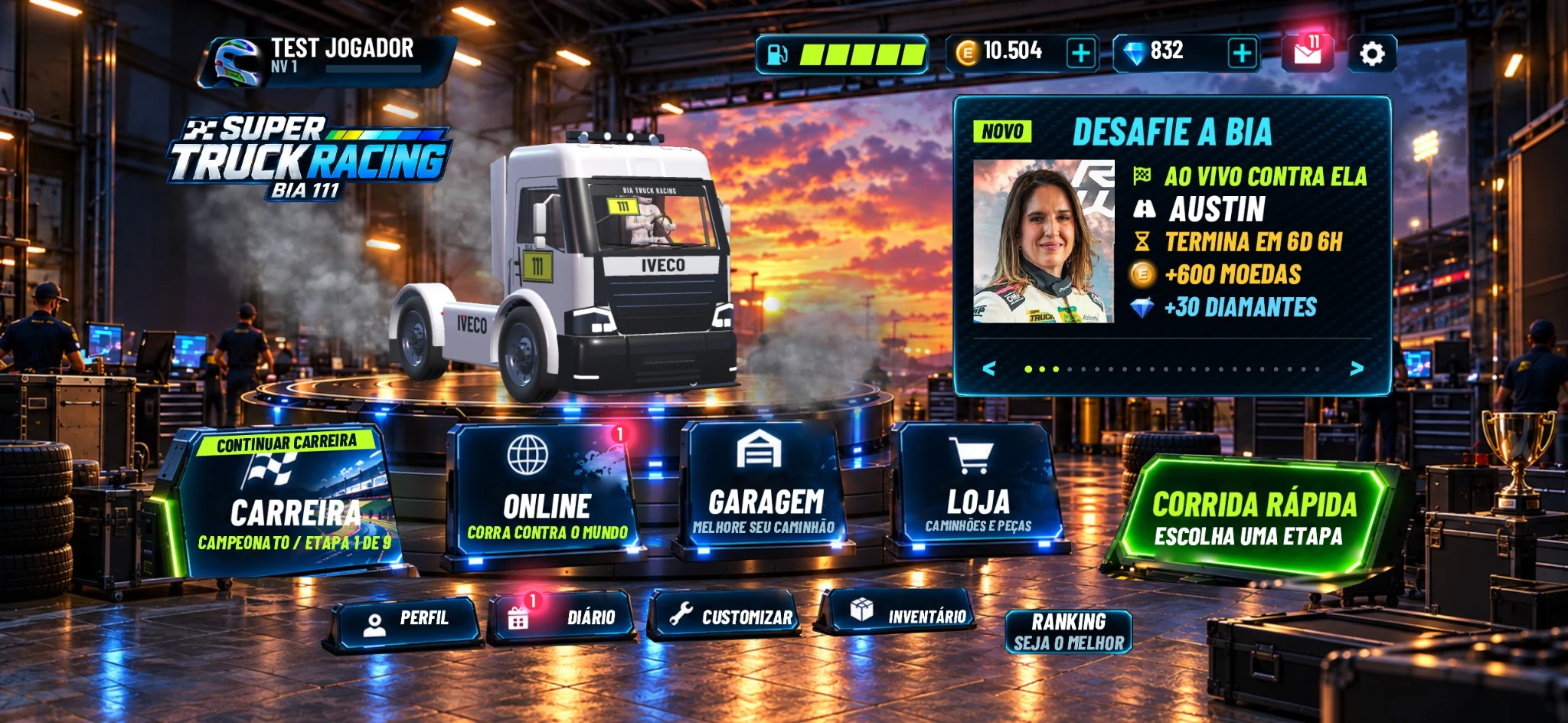
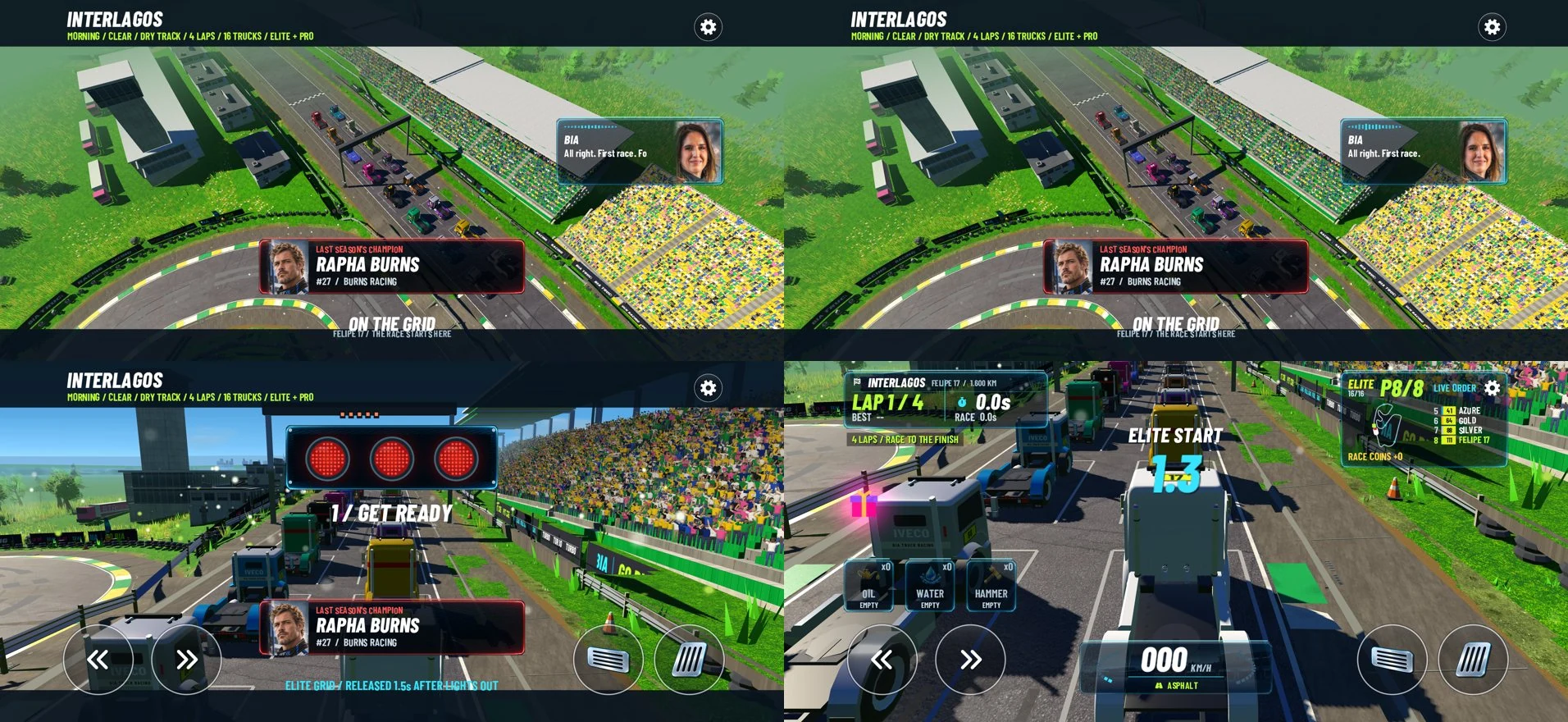
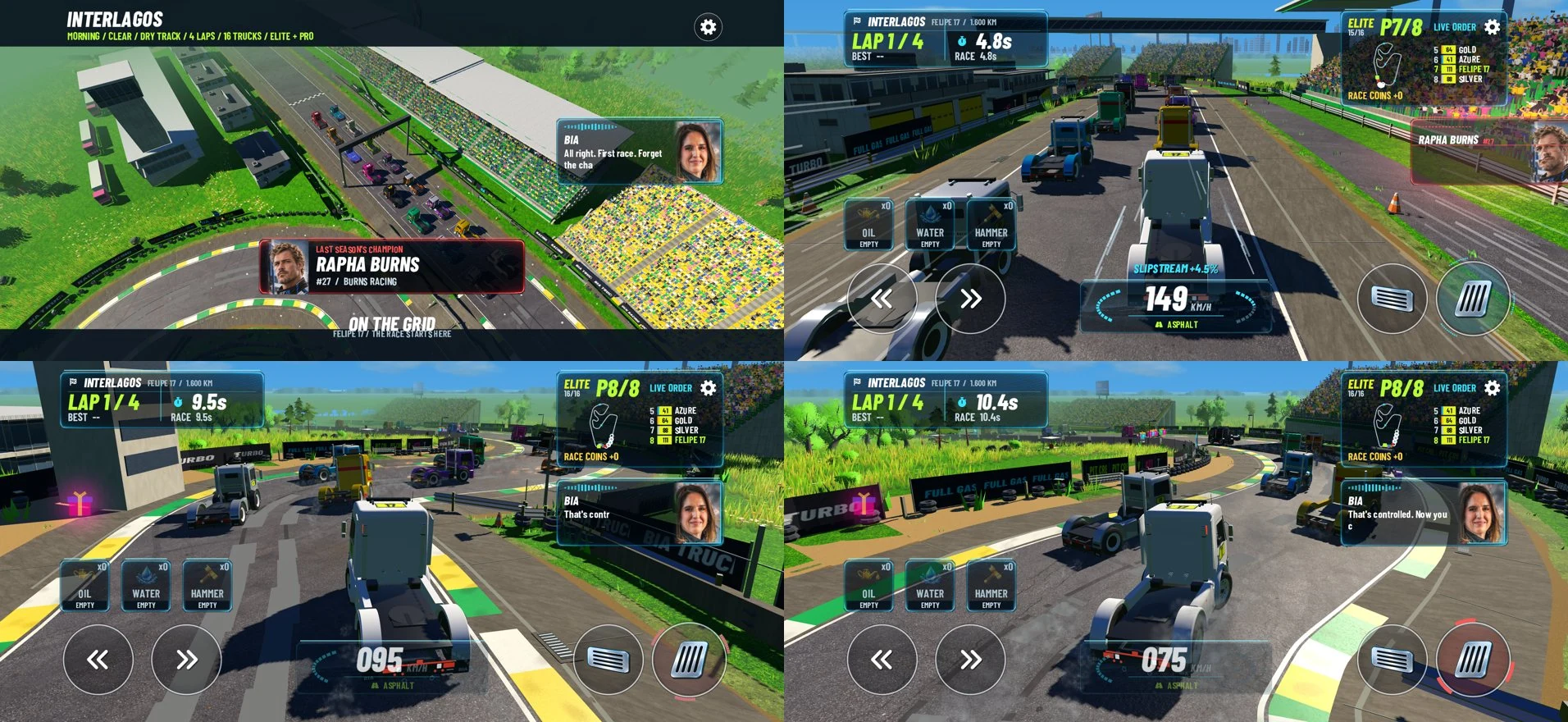
Earlier development screenshots
I kept these earlier captures to show the menu, race-start flow, and interface development. Some still use the previous Super Truck Racing name.
03.UX Decisions
The most important interface is the one players never have to look at.
In early hands-on testing, some players placed their fingers away from the intended controls while watching the track. Repositioning a thumb interrupts the race and creates avoidable mistakes.
Balancing vehicle physics
Adjust steering sensitivity, vehicle mass, braking, acceleration, and handling so a truck feels substantial without frustrating new players.
Designing session pace
Treat race length, track layout, opponent pressure, and progressive difficulty as connected parts of the experience.
Making touchscreen input intuitive
Enlarge touch targets and add press/release feedback so eyes can stay on the track rather than the virtual buttons.
Adding human motivation
Bia's coaching and characters such as Rapha Burns add context, personality, and emotional stakes.
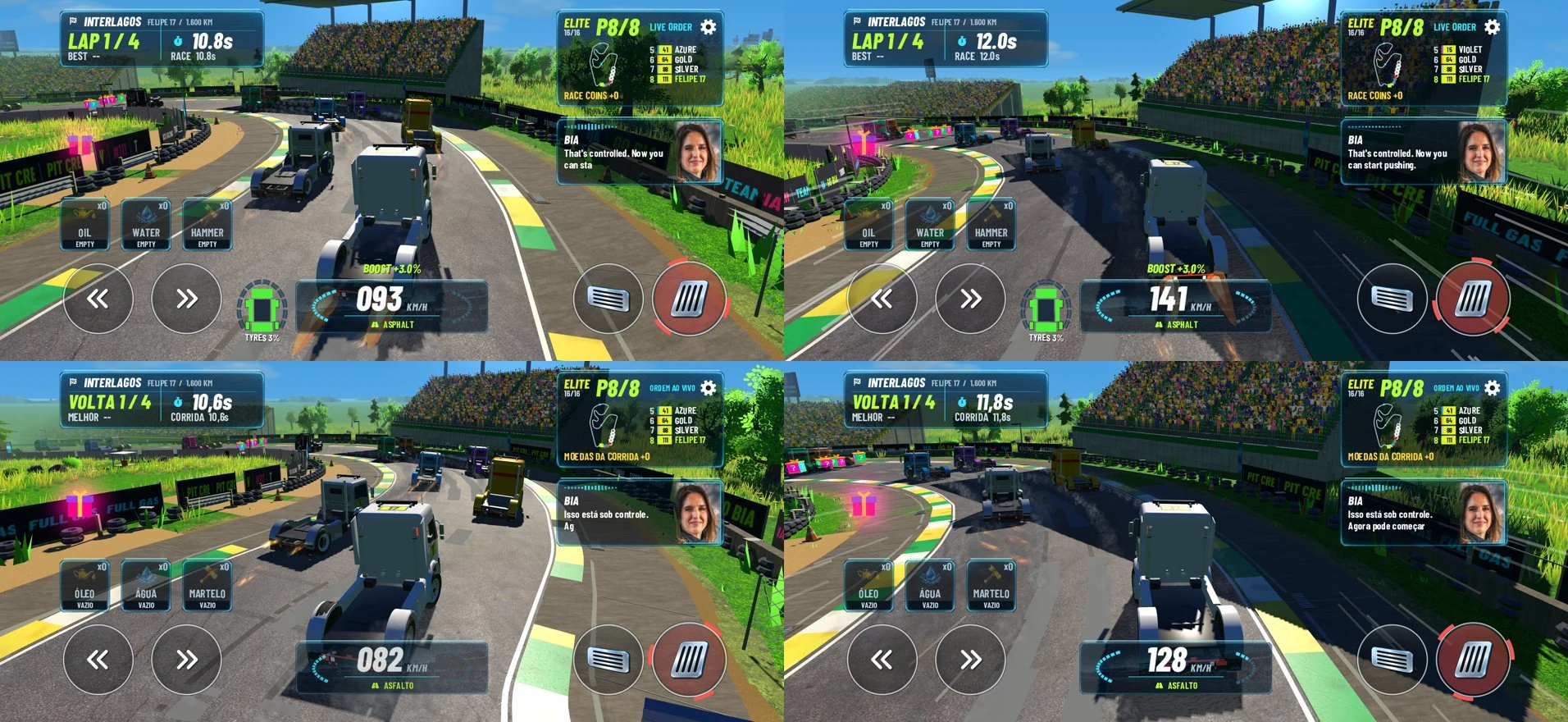
Observed → Designed → Validate next
Observed: misplaced control touches interrupted attention and vehicle handling in informal tests. Design response: larger input areas and visible pressed/released states. Next: confirm the changes through device testing and post-release behavioral data.
No formal sample size, usability success rate, or validated performance improvement is claimed.
04.Progression & Retention
The race is the entry point. The progression is the product.
I designed the rewards, progression, and upgrade choices around the racing experience. I connected the systems so each race leads to another objective.
Progression / Product design
Give every race a next objective.
A championship journey combines placement, lap times, stars, experience, and unlockable stages. The basic truck is the starting point, not the end state.
Measurement / decision objective
Meaningful activation: finish a first race and return for another race, garage improvement, or other purposeful action.
Earn 1–3 stars based on finishing, placement, and time goals.
Unlock additional stages and increase difficulty through demonstrated performance.
Improve the truck through a garage of upgradable parts, while chasing lap records and rankings.
Feature definitions and numerical upgrade specifications reflect a reviewed pre-release game build. They are not evidence of published sales, retention, or monetization performance.
05.Brand & Experience
A racing identity carried through the interface.
Branding and product design need to feel like parts of the same experience. The loading screen, garage, navigation, race UI, sponsor treatments, and character moments each establish a recognizable racing world.
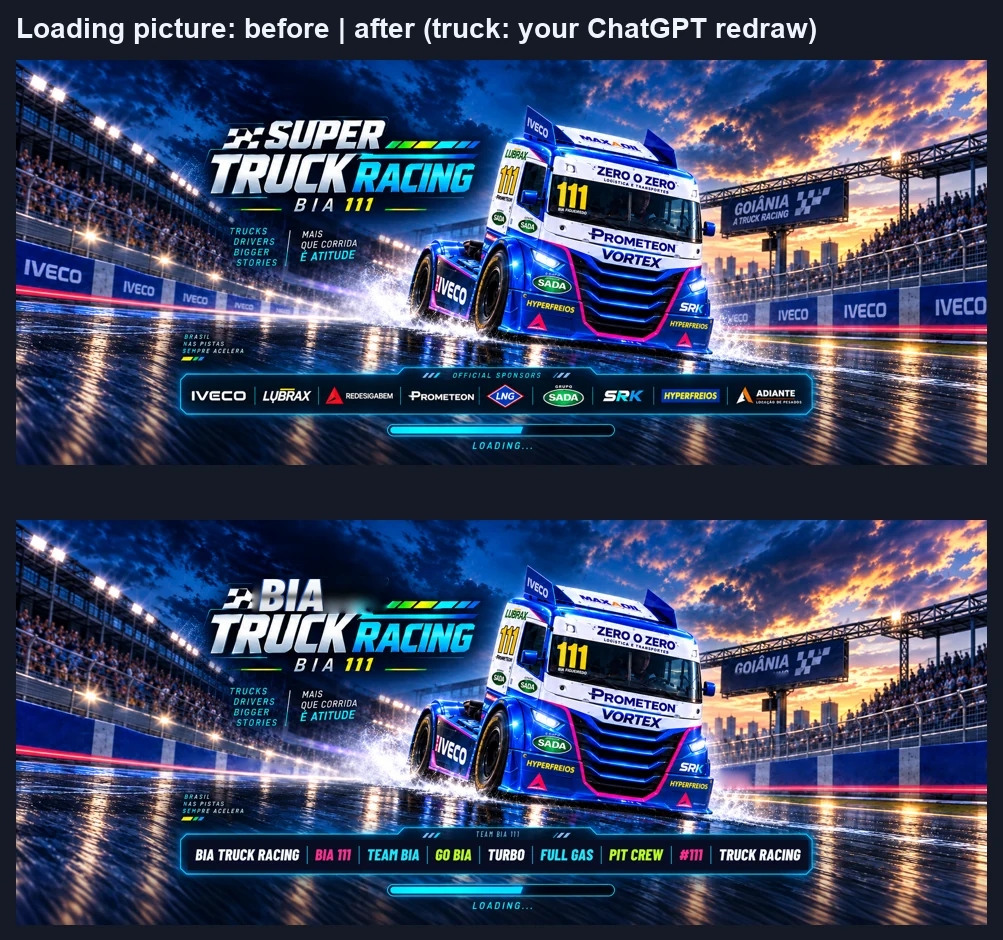
Designing for emotion and clarity.
The racing identity carries the number 111 truck, real-world racing references, promotional visuals, and Bia's presence throughout the experience. Beyond aesthetics, the interface needs to help players find a career race, understand rewards, and know what to do next.
The product's current name is Bia Truck Racing. Some earlier build captures retain the Super Truck Racing label because they document real stages of development.
A readable hierarchy for mobile decisions.
A consistent visual language from loading to racing.
Bia's coaching and distinctive rivals.
English and Portuguese experience development.
06.Launch & Growth Strategy
A growth strategy designed around the player journey.
I present the game in English and Portuguese through the launch website. I connect the trailer, screenshots, and development news to email signup and optional interest in future tests.
Acquisition
I use the public trailer, gameplay screenshots, and development articles to introduce the game and collect news signups.
Activation
Coach-led first race, initial driver setup, and progression into a second meaningful action.
Retention
Daily/weekly incentives, career objectives, records, and competition designed to motivate return play.
Experimentation
I collect optional interest in future tests and ask for device details, control feedback, and clear descriptions of problems.
Growth experiments are planned, not claimed results.
The proposed paid media test budget was approximately $500–$1,000 per month, contingent on release and performance. Planned creative comparisons include Bia-led videos, direct gameplay, and feature/benefit messaging. No spending, CPI, ROAS, or player-retention outcome is attributed to those plans.
Read the testing plan07.Results & Validation
A working game, with honest limits on what has been validated.
These are actual game-build images and product decisions. The current evidence supports a shipped-in-development experience and early qualitative feedback, not a statistically verified growth success.
Creator & Product Lead
I defined the product vision, systems, UX, and experience design, and coordinated three developers.
Early player feedback
Bia and a limited circle of testers have explored the game and shared encouraging qualitative feedback; no controlled study is claimed.
Pre-launch stage
The iOS release was in preparation/approval at the time of this case study; Android and broader distribution remain subject to launch confirmation.
What to measure after release
First race completion and subsequent meaningful action
D1, D7, and D30 returning player cohorts
Races per session, championships, upgrades and mission use
Purchases, payer conversion and progression balance
These metrics are a measurement plan, not observed results. No player counts, retention rates, app-store reviews, or revenue outcomes are invented.