

STAGE A
Orient the player
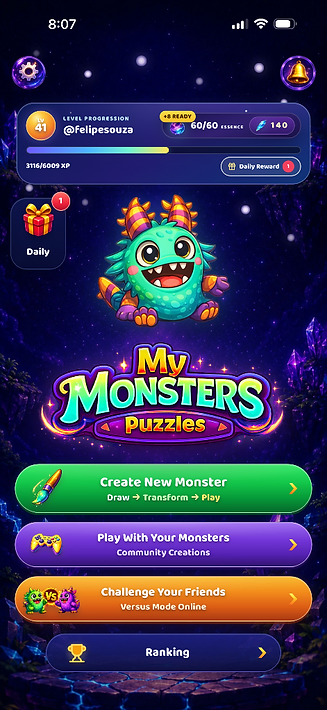
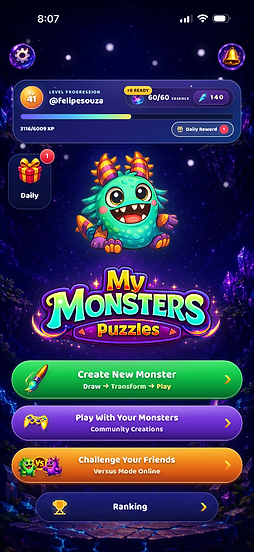
I reduced the home experience to four promises: create, play, challenge, and rank. Progression and currency stay visible, but do not interrupt the next action.


Felipe Souza · Growth Marketing Manager · Product-led growth proof
Monster Puzzles is the story of one professional taking an iOS game from product vision and code to screen-by-screen UX polish, App Store positioning, launch creative, Meta Ads testing, analytics, and rapid post-launch iteration.
Draw it. Transform it. Share it. Play with it.
The idea was simple. The system behind it was not.
I began with one product question: what if a child’s drawing did not disappear into a gallery, but became a character with a continuing life? I took the project from concept to a shipped iPhone and iPad game, owning the product architecture, experience flow, monetization, App Store launch, analytics, and iteration.
Connect a Capacitor app with native Swift, SwiftUI, and drawing technology without making the product feel fragmented.
Preserve one monster’s identity across transformation, feeds, profiles, Puzzle, Memory, likes, levels, and social challenges.
Balance character generation, user-created content, pagination, notifications, progression, sound, animation, and monetization on mobile hardware.
Design for small iPhones, iPads, safe areas, keyboards, and longer translated labels while protecting touch targets and hierarchy.
The challenge was not making every feature work alone. It was making every feature feel like the same game.
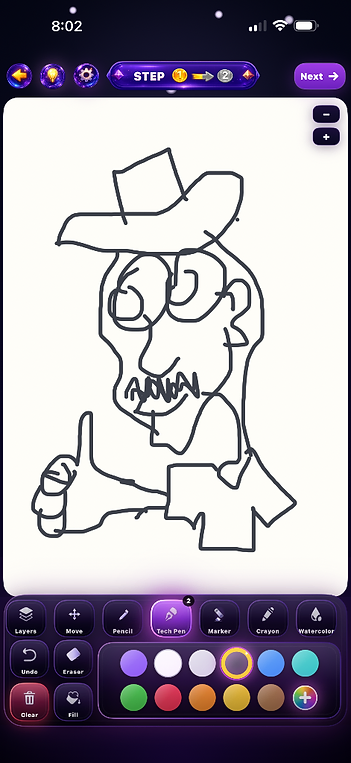
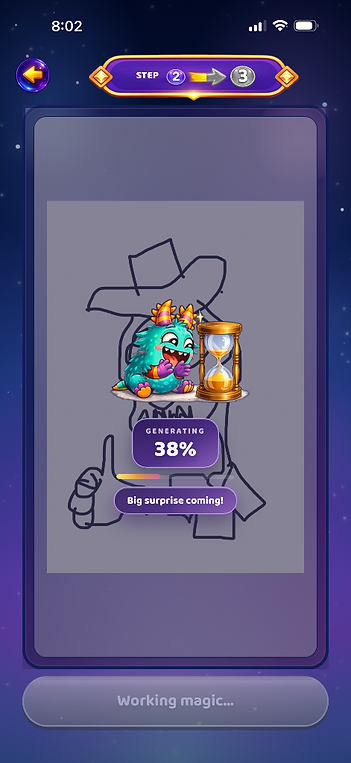
One continuous creation flow: draw with layered tools, submit the composition, communicate generation honestly, and return a reusable game character.
I designed the journey as decisions, not a gallery of screens.
The visual language is deliberately expressive, but each stage has one job. Instead of showing every interface at once, this walkthrough follows the player from orientation to creation, gameplay, and social return.
I reduced the home experience to four promises: create, play, challenge, and rank. Progression and currency stay visible, but do not interrupt the next action.
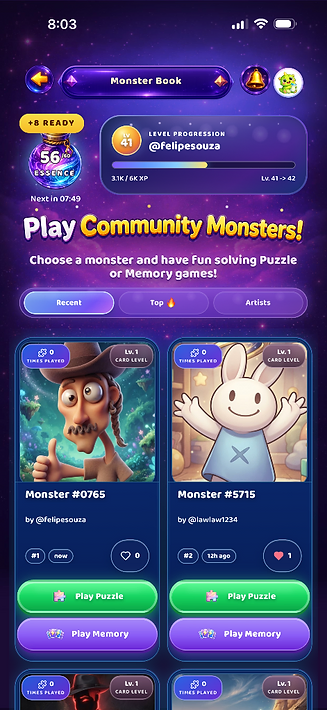
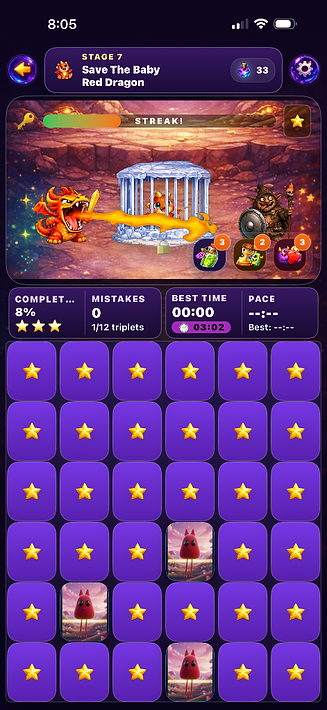
Puzzle and Memory selection use the same staged progression model, while distinct characters, piece counts, costs, and difficulty labels make the mode choice legible.
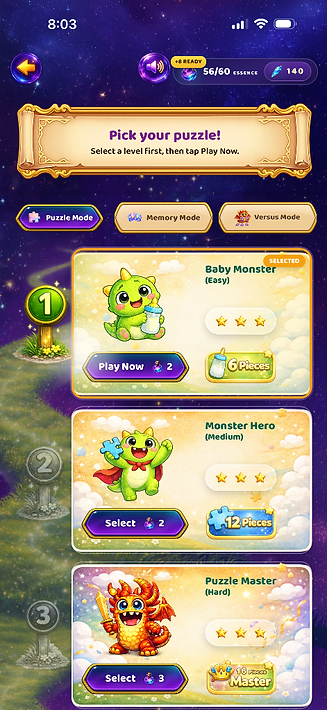
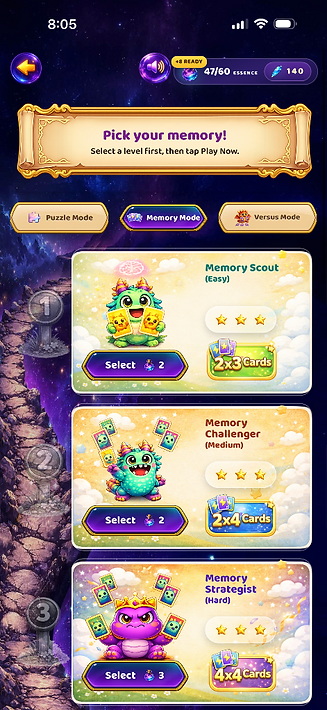
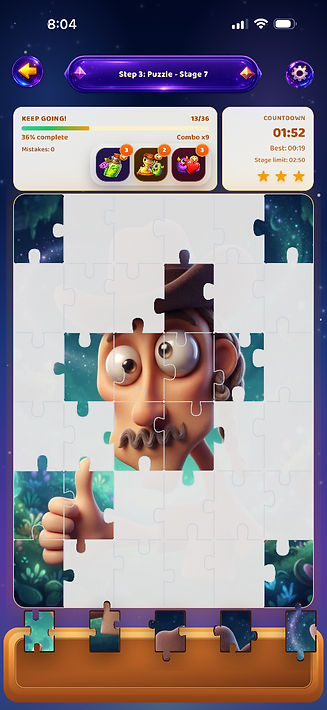
A community monster is not decoration. It becomes the content of a playable puzzle or an advanced Memory stage, connecting creator recognition with repeat gameplay.
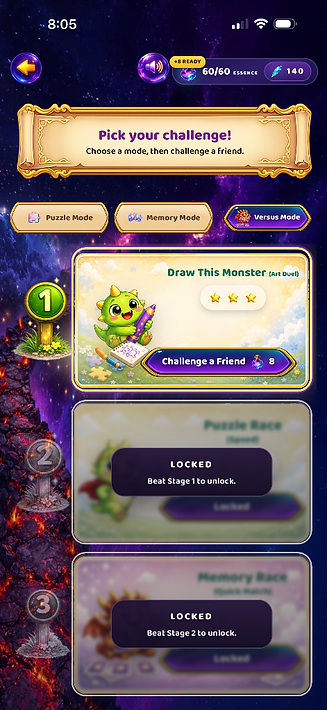
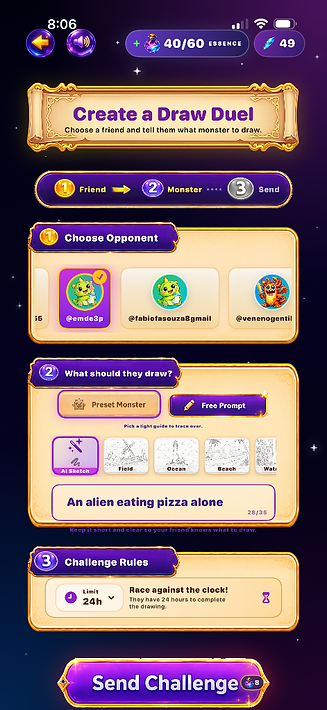
Versus Mode converts creativity into communication. Players unlock a Draw Duel, choose a friend, define the monster prompt and rules, spend Essence, and send a challenge.
I translated a complex product into one promise people can repeat.
Building the product was only half of the work. I also had to define the category, identify the playing and purchasing audiences, package the value for the App Store, and make the first-use promise match the actual experience.
Child / player
“Your drawing can become a real monster.”
Lead with ownership, surprise, collection, and friendship.
Parent / buyer
“Turn screen time into a creative, playable experience.”
Lead with constructive creativity, privacy, quality, and a clear purchase model.
App Store proposition
Free starter gameplay lowers the first-use barrier. A one-time Full Game Unlock adds tools, styles, stages, Pro Mode, normal Essence recovery, no ads, and no subscription.
View App Store
The rating is early directional proof, not a headline performance claim.
I marketed the behavior that makes the product different.
I connected the full marketing funnel, from awareness and consideration to App Store conversion and player retention. The launch strategy visualized the transformation journey in seconds, then used Meta creative and product data to decide which story deserved more distribution and what to improve next.
10%
D7 retention
Early cohort, before optimization
87.6%
Conversion share
Driven by one optimized creative
96%
Below benchmark CPC
Versus relevant industry average
1.62
Ad frequency
Below the 3–4 fatigue threshold
Open on the raw drawing and reveal the transformed monster. Measure the opening hook through three-second hold and early video retention.
Show drawing, transformation, Puzzle or Memory play, community, and friend challenge in one concise product demonstration.
Move qualified viewers to the App Store and evaluate CPC, click-through, store action, install, and first creation, not reach alone.
Use D7 retention, creative response, reviews, and product behavior to improve the experience and bring players back.
What the result means
One creative produced 87.6% of tracked conversions while frequency remained controlled, evidence that I found a resonant product story before audience fatigue set in.
The launch became the next product brief.
I treated acquisition signals, retention, reviews, purchase behavior, and device testing as inputs to the roadmap, not as a final report. Five product updates shipped in under a month after launch, improving purchase flow, stability, performance, and UI polish.
5
updates in under one month
Product learning
Retention and purchase friction determine what I polish next.
Growth learning
Creative response determines how I explain and distribute the product.
My vision is a living creative platform where players do not only consume the world; they make its characters, challenges, inventory, and stories.
The launch story in motion
This launch video turns the complete development effort into a marketable sequence: a child draws, the drawing becomes a character, and the product gives that imagination somewhere to go.


